Starting Solids: A Practical Guide to Baby's First Foods
Updated: Oct 12
Wondering when your baby is ready for solid foods? From choosing first foods and introducing allergens to managing new textures and food refusal, this practical guide will help you get started with confidence.

Your baby's first taste of solid food can be an exciting milestone. Maybe you've been looking forward to watching them try mashed avocado or a spoonful of sweet potato. Or perhaps you're feeling a little nervous about what to offer, how much they'll eat, and whether they're actually ready.
Starting solids comes with plenty of questions. Should you begin with vegetables or fruit? Are purées better than finger foods? What if your baby refuses everything you offer? And how do you know which foods are safe?
The good news is that you don't need an elaborate feeding schedule, expensive equipment, or a freezer filled with homemade baby food to begin. What matters most is recognizing when your baby is ready, offering nutritious foods in safe textures, and giving them time to learn.
Some babies take to eating almost immediately, while others need more patience and practice. Both experiences can be part of a normal feeding journey. Here's what to know before that first spoonful and how to make the transition from milk to solids a positive experience.
When Should Babies Start Eating Solid Foods?
The American Academy of Pediatrics (AAP) and Centers for Disease Control and Prevention (CDC) recommend introducing solid foods at about six months of age, when babies show signs of developmental readiness.
Although some babies may appear interested in food earlier, interest alone doesn't mean they're ready. The ability to sit upright with support, control the head and neck, and safely move food toward the back of the mouth matters more than reaching a particular weight.
Introducing solid foods before four months is not recommended. Some babies may have individual medical or developmental circumstances that require guidance from their pediatrician, so it's worth discussing readiness during a routine checkup.
The CDC's guide to introducing solid foods explains how to recognize readiness and begin feeding safely.
Signs Your Baby May Be Ready for Solids
Look for several of these developmental abilities:
Sitting upright independently or with support.
Holding the head and neck steady.
Opening the mouth when food is offered.
Showing interest in food and reaching for objects.
Bringing objects toward the mouth.
Swallowing food rather than consistently pushing it back out.
You don't need to rush because another baby the same age is already eating. Babies develop at different rates, and if yours doesn't seem ready at around six months, your pediatrician can help you decide what to do next.
What Should You Feed Your Baby First?
There's no single food that every baby should try first. You can begin with age-appropriate vegetables, fruit, grains, and protein-rich foods, gradually building variety as your baby learns to eat.
Soft, cooked carrots, mashed avocado, smooth pear purée, and iron-fortified infant oatmeal are common starting points. You can also offer appropriately prepared meat, lentils, beans, or egg once your baby is developmentally ready.
You don't have to introduce vegetables before fruit, and there's no evidence that trying fruit first automatically makes babies reject vegetables later. What matters is offering different flavors and textures over time.
Why Iron-Rich Foods Matter
Iron becomes especially important around six months, as babies' nutritional needs increase. For breastfed babies in particular, complementary foods help provide nutrients that breast milk alone may no longer supply in sufficient amounts.
Good iron sources include iron-fortified infant cereals, thoroughly cooked and appropriately puréed meat, lentils, beans, and other iron-containing foods. Offering a variety of these foods helps support growth and development.
Homemade oatmeal and rice cereal can be useful additions to a baby's diet, but homemade cereals generally aren't fortified with iron. If you prepare most foods yourself, make sure your baby's diet also includes appropriate iron-rich choices. For more information, see the CDC's guidance on iron and infant nutrition.
Simple First Foods to Try
You can start with a few affordable, easy-to-prepare ingredients:
Carrots or sweet potatoes, cooked until very soft and puréed.
Apples or pears, cooked and blended to a suitable consistency.
Plain, iron-fortified infant oatmeal prepared according to package instructions.
Soft, mashed avocado or banana.
Well-cooked lentils or beans, smoothly mashed or puréed.
Thoroughly cooked chicken, beef, or other suitable protein blended to an appropriate texture.
Well-cooked egg prepared in a soft, age-appropriate form.
At first, offer one new single-ingredient food at a time so you can observe how your baby responds. The AAP recommends waiting approximately three to five days between new foods during the early introduction period. Once ingredients are tolerated, you can begin combining familiar foods into simple meals.

Purées or Baby-Led Weaning: Which Approach Is Better?
Parents often hear about traditional purées and baby-led weaning, but choosing one approach doesn't mean you can never use the other. With spoon-feeding, you begin with smooth foods and gradually introduce thicker textures. Baby-led weaning places more emphasis on offering appropriately prepared foods that babies can explore and bring to their mouths themselves.
Some families prefer one method, while others combine both as their baby's eating skills develop. Neither approach removes the need to prepare food safely or supervise every meal.
Starting With Purées
Smooth purées can be an approachable way to introduce new flavors. Begin with soft foods blended into a manageable consistency, then gradually offer thicker mashed textures as your baby becomes more comfortable.
You don't need to keep every meal completely smooth for months. Learning to manage different textures is an important part of eating development, and your baby's skills will change as they grow.
Introducing Soft Finger Foods
When your baby demonstrates the necessary sitting, grasping, and oral-motor skills, you may offer soft foods prepared in age-appropriate shapes and sizes.
Foods should be easy to manage and soft enough for your baby's current abilities. Hard, round, sticky, or tough foods can become choking hazards, even when they're otherwise nutritious.
If you're unsure how to prepare a particular food, ask your pediatrician or a qualified feeding professional. The CDC's guidance on tastes and textures offers helpful information about progressing beyond smooth purées.
How Much Should Your Baby Eat at First?
During the first few meals, your baby may eat surprisingly little. A small spoonful might be enough before they lose interest, turn away, or become distracted. That's perfectly possible during the learning stage. The CDC suggests starting with approximately one or two tablespoons and watching your baby's hunger and fullness cues rather than expecting a finished bowl.
Breast milk or infant formula remains a major source of nutrition throughout the first year, especially during the early months of introducing solids. Solid foods gradually complement milk feeds rather than replacing them overnight.
What Can the First Week Look Like?
Start with one calm opportunity to explore food during the day, ideally when your baby is alert and comfortable. Offer a small amount of an appropriately prepared ingredient, let them respond at their own pace, and continue their usual milk feeds.
Over time, you can introduce additional ingredients, textures, and eating opportunities. There's no need to establish a full breakfast, lunch, and dinner schedule during the first few days.
The CDC's feeding frequency guidance explains how eating patterns change as babies become more experienced with solids.
What If Your Baby Refuses Solid Foods?
Not every baby welcomes the first spoonful. Some immediately enjoy new flavors, while others turn their heads, close their mouths, spit food out, or seem more interested in playing with the spoon.
It can be discouraging, particularly if you've carefully prepared a meal and your baby refuses to taste it. But accepting solid food is a skill that develops with experience, and one rejected meal doesn't predict how your child will eat in the future.
Try offering foods again on another day without pressure. You may find that a different texture, a calmer mealtime, or simply more opportunities to explore food makes the experience easier.
Encourage Exploration Without Forcing Bites
Pay attention to signs that your baby wants to continue eating, such as leaning toward food or opening their mouth. If they turn away, close their mouth, or become upset, stop and try another time.
Babies may need repeated opportunities to become comfortable with unfamiliar foods. Allowing them to touch, smell, and explore suitable foods can be part of the learning process, even when very little is swallowed.
Avoid turning feeding into a struggle or repeatedly pushing a spoon into a reluctant baby's mouth. If food refusal continues, or you notice coughing, choking, vomiting, discomfort, or poor growth, speak with your pediatrician.
Making Baby Food at Home
Homemade baby food doesn't have to be complicated. Many ingredients you're already using can be prepared in a softer, simpler form for your baby.
A saucepan, fork, blender, and a few clean containers may be all you need. Cook foods thoroughly when required, adjust textures according to your baby's development, and avoid adding unnecessary salt or sugar.
If preparing meals from scratch works for your family, it can offer flexibility and help you introduce a variety of ingredients. Store-bought baby foods can also be convenient and nutritious, particularly when you choose options appropriate for your baby's age and nutritional needs.
Homemade Oatmeal With Fruit
Cook plain oats until soft, then adjust the consistency with water, breast milk, or properly prepared infant formula as appropriate. For babies beginning with smooth textures, the oatmeal can be blended and combined with a familiar cooked fruit such as pear or apple.
As your baby becomes comfortable with thicker textures, the oatmeal can be served softly mashed rather than completely smooth.
If using homemade oatmeal regularly, remember that it isn't necessarily iron-fortified. Include suitable iron-rich foods throughout your baby's meals.
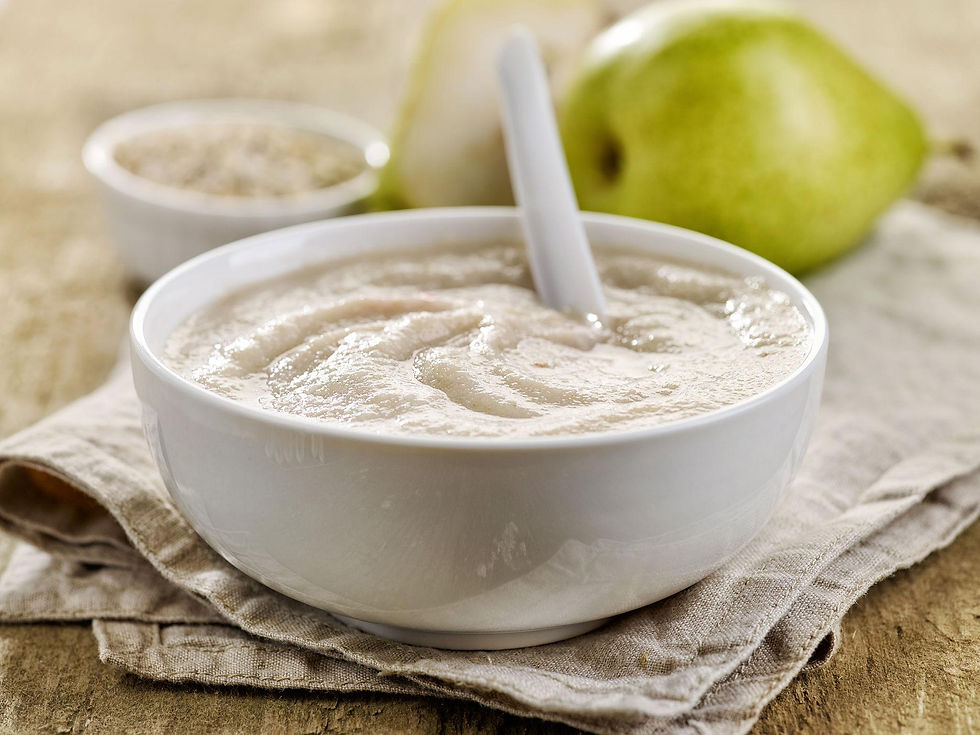
Homemade Rice Cereal and Other Grains
Rice cooked until very soft can be blended into a smooth cereal. However, rice shouldn't be the only grain you regularly offer, particularly because of concerns about arsenic exposure.
Consider a variety of age-appropriate grains, including oats and barley. Iron-fortified infant cereals may also be useful because they provide nutrients that plain homemade grain preparations may lack.
Serve cereals and other solid foods by spoon or through another developmentally appropriate feeding method.
Do not add infant cereal or other solid foods to your baby's bottle unless specifically directed by a clinician for a medical reason. The CDC advises against putting cereal in bottles because it can increase choking risk and doesn't make babies sleep longer.
Preparing and Storing Homemade Baby Food Safely
Wash your hands, utensils, and food-preparation surfaces before cooking. Thoroughly cook foods that require cooking, remove bones and seeds, and prepare ingredients in textures suitable for your baby's abilities.
Refrigerate perishable prepared foods promptly and follow safe storage times for homemade baby food. Avoid saving leftovers from a bowl that your baby has eaten from, because saliva introduced during feeding can contaminate the remaining food. You don't need to prepare large batches immediately. Starting with small portions can reduce waste while you're learning which foods and textures your baby enjoys.
When and How Should You Introduce Common Food Allergens?
Foods such as eggs, peanuts, wheat, soy, dairy, fish, shellfish, sesame, and tree nuts are common allergens. Parents sometimes delay them because they're concerned about allergic reactions, but current pediatric guidance generally does not recommend unnecessarily postponing their introduction once babies are developmentally ready for solids.
For most babies, allergens can be introduced in safe forms after they have tolerated a few initial foods. Offer small amounts and watch for reactions. Once tolerated, continue offering age-appropriate forms regularly as part of a varied diet. Preparation matters. Peanut butter, for example, can be thinned and mixed into a suitable purée or cereal. Whole peanuts and thick spoonfuls of nut butter are choking hazards and should not be given to babies.
If your baby has severe eczema, an existing egg allergy, or a history of significant food reactions, consult your pediatrician before introducing peanut-containing foods. Some children require individualized assessment.
Signs of a possible allergic reaction include hives, swelling, and vomiting after eating. Difficulty breathing, swelling involving the throat, sudden limpness, or other signs of a severe reaction require immediate emergency care. The AAP's food-allergen introduction guide explains current recommendations.
Gagging vs. Choking: What Parents Need to Understand
Watching your baby gag can be frightening, particularly when you're just beginning solids. However, gagging and choking are not the same. Gagging is a protective reflex that may involve coughing, retching, or pushing food forward. As babies learn to manage textures, some gagging can occur.
Choking happens when something blocks the airway and prevents effective breathing. A baby who cannot breathe, cough, or cry effectively needs immediate emergency assistance.
Parents and caregivers should learn infant choking first aid and CPR through a qualified training provider before beginning solids.
How to Reduce Choking Risks
Always seat your baby upright and properly supported during meals.
Stay with your baby and watch closely while they eat.
Prepare food in shapes, sizes, and textures appropriate for their developmental abilities.
Avoid whole grapes, whole nuts, popcorn, hard raw vegetables, large chunks of meat, and thick spoonfuls of nut butter.
Remove bones, pits, and hard seeds.
Never feed a baby while they're lying down, walking around, or riding in a moving vehicle or stroller.
Even foods considered healthy can be dangerous when offered in the wrong form. See the CDC's choking-hazard guidance for examples of foods requiring special preparation or avoidance.
Foods and Drinks to Avoid During the First Year
As babies begin enjoying family meals, you'll naturally want to offer them more variety. However, certain foods and drinks should be avoided or limited during infancy.
Honey should never be given to babies younger than twelve months because of the risk of infant botulism. This includes honey mixed into food or drinks.
Whole cow's milk should not replace breast milk or infant formula as a baby's main drink before twelve months. However, pasteurized plain yogurt and cheese can be introduced earlier in suitable amounts and textures.
Avoid juice before twelve months, minimize foods high in sodium, and choose foods without added sugars. Hard, sticky, round, or otherwise unsuitable foods should be avoided because of choking risks. You can review the full guidance in the CDC's foods and drinks to avoid or limit.
What Feeding Essentials Do You Actually Need?
It's easy to assume that starting solids means purchasing a completely new collection of baby products. High chairs, silicone plates, suction bowls, bibs, food processors, and specialized storage containers can quickly add up.
In reality, many families can begin with a supportive high chair that meets applicable safety standards, a suitable spoon, a bib, and a simple bowl. A small, age-appropriate cup can also become useful as your baby's drinking skills develop.
Suction plates, washable floor mats, food storage containers, and dedicated baby food makers may be convenient, but they're not essential for everyone. Consider how often you plan to prepare food and which items would genuinely simplify your routine.
If you're still preparing for your baby's arrival, our Newborn Essentials Checklist: What You Really Need Before Baby Arrives can help you decide what to have ready before birth and what can wait.
For a closer look at feeding equipment, read our Baby Feeding Essentials guide, which covers the supplies worth considering and those you may be able to skip.
What If Your Baby's Eating Habits Change?
One of the most surprising things about feeding babies is how quickly preferences can change.
A baby who initially rejects a vegetable may enjoy it several weeks later. Another who happily accepts every purée might become more selective as they grow into toddlerhood. Changes in appetite, independence, and food preferences are common as children develop.
Rather than labeling your baby a picky eater too early, keep offering variety and allow them to explore food at their own pace. Continue adapting textures to their abilities and offering foods that support their nutritional needs.
If you're concerned about persistent refusal, a very limited range of accepted foods, swallowing difficulties, or growth, seek advice from your pediatrician.
Before You Worry About How Much Your Baby Is Eating
It's easy to compare when another baby seems to be finishing entire bowls of food while yours is still getting used to a few spoonfuls.
But the early months of solids aren't just about how much food your baby consumes. They're about learning to sit at the table, recognize new flavors, manage different textures, and gradually become more comfortable with eating.
Some meals will go smoothly. Others will end with food on the floor, a rejected spoon, and very little in your baby's stomach. Both can be part of the learning experience.
Start with safe, nutritious foods. Follow your baby's cues, keep mealtimes relaxed, and ask for support when something concerns you.
Your baby doesn't need to become an adventurous eater overnight. With patience, variety, and appropriate guidance, you can help them build a positive relationship with food, one meal at a time.
Numebaby's Quick Starting Solids Guide
When should babies start solids?
Around six months, when they show signs of developmental readiness. Ask your pediatrician if you're unsure.
What are good first foods for a baby?
Iron-rich foods, smooth vegetables, fruit purées, and iron-fortified infant cereals are all options.
How much should my baby eat initially?
Begin with small amounts, often around one or two tablespoons, and follow their hunger and fullness cues.
Are purées better than baby-led weaning?
There isn't one required approach. Safe spoon-feeding, age-appropriate finger foods, or a combination may work depending on your baby's development.
What if my baby refuses food?
Don't force the feeding. Offer the food again another day and contact your pediatrician if refusal is persistent or affects nutrition or growth.
Can I make my own baby cereal?
Yes, but homemade cereal isn't necessarily fortified with iron. Include other suitable iron-rich foods.
Is it safe to put cereal in a bottle?
Generally, no. The CDC advises against adding solid foods to bottles because of choking risk.
When can my baby try allergenic foods?
For most babies, allergens can be introduced in safe forms once they're ready for solids. Babies at higher allergy risk may need individualized medical guidance.
Do I need expensive baby-feeding equipment?
No. A safe high chair and a few basic utensils are enough for many families.
A Note From Numebaby
This article is intended for general educational purposes and does not replace individualized medical or nutritional advice. Babies develop at different rates, and feeding needs may vary due to prematurity, allergies, growth concerns, or swallowing difficulties. Consult your pediatrician when you have concerns and follow current food-safety and choking-prevention guidance.


Comments